
I did not expect the messages that came in after my last letter, Obsession Is Not Love, and Neither is Intensity. Then I thought about the people who ask me, regularly and with a straight face, for advice on their love lives, and I caught myself wondering: why on earth would you ask me?
If you know me intimately, you know I have said those exact words out loud. The answers tend to run along two lines. “Well, you give good advice. Whether you take it yourself is a different story.” And: “You keep daring to do it anyway, the love thing, so I’m intrigued.”
The thinker in me has landed here: nobody needs another lesson from the perfect and the polished, in any regard or capacity. The polished have nothing to report.
I have fucked up a ton. I am still standing, with a backlog of expensive lessons. And maybe it is better to bring your heartbreak, your anxiety, your 2 a.m. concerns to someone who, quite transparently, has no standing to judge you.
Alas, ask and ye shall receive.
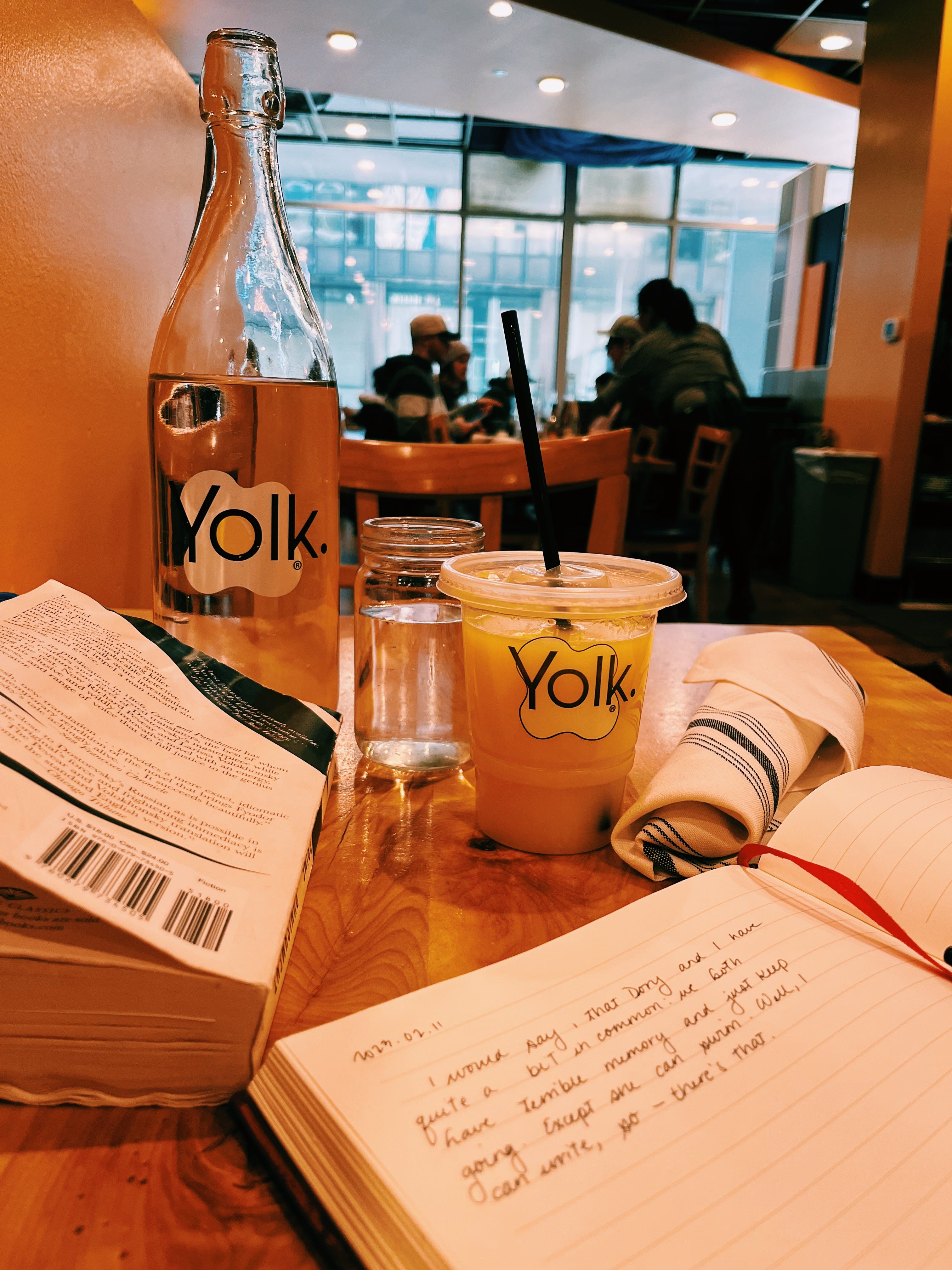
The elusive fox
I have a serious problem. For a romantic, I very rarely date. One can say I more often fantasize about my person landing in my lap. Perhaps that is how it is meant to happen.
I cannot seem to find the time, nor the desire. The apps get downloaded. I mean to answer. Then I realize I would rather see that friend, that show, read that book, learn a new language, book the flight, build the business. Literally anything but meet a stranger for drinks and sit through the talking phase. Maybe it is because I am a Program Manager by day and all I do is yap. I dunno.
On average, aside from my two marriages, I have dated someone intentionally about once a year. It exhausts me so thoroughly that I need months to recover. I would not be surprised if I make up a significant share of my therapist’s business on recovery time from my short-lived relationships alone.

So the interesting question is not why I date so little. It is what gets past the gate when I do. In reflection, how did these people manage to catch this elusive fox?
The same three ways, every time.
I am extremely prone to intensity.
I am prone to ignoring my gut. A lot of capable women are.
I am prone to binary thinking.
Let me take them in order, because they are not three separate flaws. They are one system, and it runs in sequence. My hope is that in me being vulnerable and clear, it helps another feel seen.
One: I am extremely prone to intensity
My brain does not seem to care whether someone says they love me in a matter of days, weeks, months, or years. I think it is because, for a woman who runs a jam-packed life solo, intensity is wildly efficient. There is plenty I would love to share with a partner: my day, the travel, the company, good sex, what have you. If I think you are cool and you are already devoted, great. Let’s get on with the adventure of life, which is how I try to live every day anyway.
I have yet to report a boring day.
Similar to limerence, Stendhal borrowed an image for this from the salt mines near Salzburg. Throw a bare winter branch into an abandoned shaft, he wrote in 1822, and months later it comes out covered in crystals, every twig glittering. That, he said, is what the mind does to a beloved. It coats them in perfections. He called it crystallization. My version does not need the months. Intensity hands me the crystals before I have spent a single ordinary Tuesday with the branch.
Here is the glaring problem. Just because it feels great does not mean it is safe, or sustainable. And we get… hooked on the feeling. When the intensity reels back, (and it always reels back), healthy couples do the work. As my mentor and dear friend put it, they allow themselves to be influenced by each other, and they change in the same direction.
Let me give you an example: I am grateful for having been told this by my mentor, and it is not the first time. I knew it already to be true. And yet, I have been partnered with someone who thought every ask I had, or shift was some sort of manipulation. I stayed anyway, because I got so addicted to the good feeling that somewhere deep inside you start thinking: fuck, this would suck if it changed. That is a very natural thought, and I will not pathologize it.
Couple it with what you already know about my inconsistent care and upbringing, and the next point becomes painfully obvious.
Two: I am prone to ignoring my gut
This is my number one recurring piece of work in NARM and somatic therapy. I can explain away a “bad vibe” or a sinking gut with the best of them. I am getting better at it. But let me argue, probably to my therapist’s disdain, why I think the skill is useful elsewhere in life, and sticks around still.
I am good under pressure, and I can push past tired when I need to. Is that net positive for my well-being? No. Probably not. But if we all followed our gut and did only what we wanted, we might all be lounging in bed in fluffy pajamas, and that is certainly not how I got to where I am today.
The trouble is that the muscle that pushes past tired is the same muscle that pushes past afraid, and it cannot tell the difference. I have spent over thirty years training it. So when someone says “I love you” on day five and a small, quiet part of me flinches, the muscle does exactly what it was built to do. It overrides. It files the flinch under old wiring and gets back to work.

Annie Wright, the relational trauma therapist, calls that flinch the second response: the quieter one that arrives after the joy. Her argument is that it is usually not damage misfiring. It is relational intelligence noticing that the pace has outrun what you actually know about the person. Capable women are extraordinarily good at talking that voice down. We have been rewarded for it our whole lives, everywhere except here.
Which leads us to the third pattern, the one that does the real damage.
Three: I am prone to binary thinking
I preach, constantly, that intent does not negate impact. Then I fall for someone and quietly suspend the rule on their behalf.
Here is how it goes. I start assessing their genuineness. If the love is genuine, I reason, then it is not a calculated manipulation, not love-bombing in some narcissistic cycle we are all blasted on our feeds about. Maybe it is simply anxious attachment. Maybe it is really my person. So on, and so forth. And my brain lands on: this person really cares about me, they are just excited. Everything else is not that important.
But alas, it is.
“Can love bombing be genuine?” yes. Sometimes the person means every word. Sometimes the intensity comes from attachment that is real and badly regulated, from someone grabbing for the connection before it can disappear on them. And it does not matter.
The body on the receiving end has no access to his intentions. It only has the record of what was done to it. The feeling can be real and the pattern can still be unsafe. Both true, and at once.

So “is it genuine?” turns out to be the wrong question. It is the question a Romantic asks because it has an answer she can live with. The questions that actually tell you something are about what happens when the intensity recedes, and who you are becoming while it plays.
I knew this in theory. I had just written a whole letter about it. The binary survived anyway, because the binary is comfortable: genuine or manipulative, sorted, done. Let’s get on.
Sorting fast is a skill I learned early, for reasons regular readers already know. The truth is a both/and, and both/and requires you to keep watching.

What actually matters
So here is what I am learning matters more, to me, than whether someone is genuine. This list is mine; yours will differ. But it is the exact list my brain skips when it is busy doin’ its thang and crystallizing, so I now must keep it written down.
How they hold my disappointment
How do they make me feel when I disappoint them?
What happens when I express a concern? Historically, people have weaponized my therapy and my traumas: “Is this a me thing, or a you thing?” It bugs me, because partnership is a we thing. I also take hyper-accountability, and that is easy to exploit.
Can they take accountability? Repair depends on it.
Do they push me to open up faster than I am ready?
What they are made of
How rigid are they? Are they adaptable and fluid? I am a very adaptable person, which means I will over-adapt to a fixed one. Book, notebook, pen, laptop, and I can usually navigate life anywhere, anytime.
Are they actively working on themselves? Therapy is a good measure, but good therapy is hard to find and expensive. Reading, writing, any honest method of reflection and growth counts.
Are they consistent?
Are they intellectually curious?
Are they funny? Yes, this matters. Life is rough. I like to laugh.
Do we share the same values?
How they regard me
Do they care about my humanity, my personhood, my feelings?
Do they speak kindly about me to others?
Are they capable of forgiveness?
Do they listen to understand, or listen to respond?
Do they treat me like a problem to solve, or accept me for who I am?
Do they appreciate me?
Do they need me to do most of the work? I am a workhorse, and that is the other exploitable thing. If I have to spell out exactly what needs doing, how, and why, I will burn out.
Who I become
Who am I becoming in this relationship? I have always been a goal → action → result person. I want my partner and I to empower each other’s goals so that our lives expand, not contract.
Are their friends, family, and community kind? I will be living inside that world, too.
Do they need me to need them, or do they support my strength and independence?
Especially in our thirties and forties, we are all tired, and we all carry a checklist. The list above matters more to me than height, appearance, occupation, family, or even history. Did I learn this the hard way?
YES.
Regardless of me adding a drop in the ocean of already-available resources, will you, too learn the hard way?
Probably, yes.
The deathbed test
My therapist helped me see this.
On my deathbed it will not matter how much money my partner made, because I can take care of myself.
It will not matter how they looked, because looks fade.
It will not matter what their past was, because I myself am an exemplar of the power of change.
What will matter is whether I was regarded. Whether I could disappoint someone and still be loved. Whether I expanded in the process.
And that, my friends, is where I am in my lessons so far. The fox is still out here, and still The Last Romantic. She has only learned the difference between being caught and being chosen. Like a fish, being caught means you can be released just as quickly.
I will probably write a career version of this at some point, because all of this end-of-year reflection is showing me how much I have grown.
I am one step closer to alignment.